Cooling Incubator
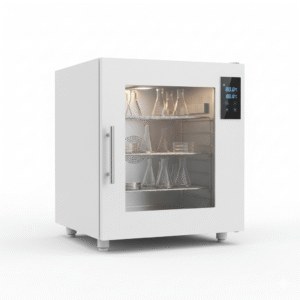
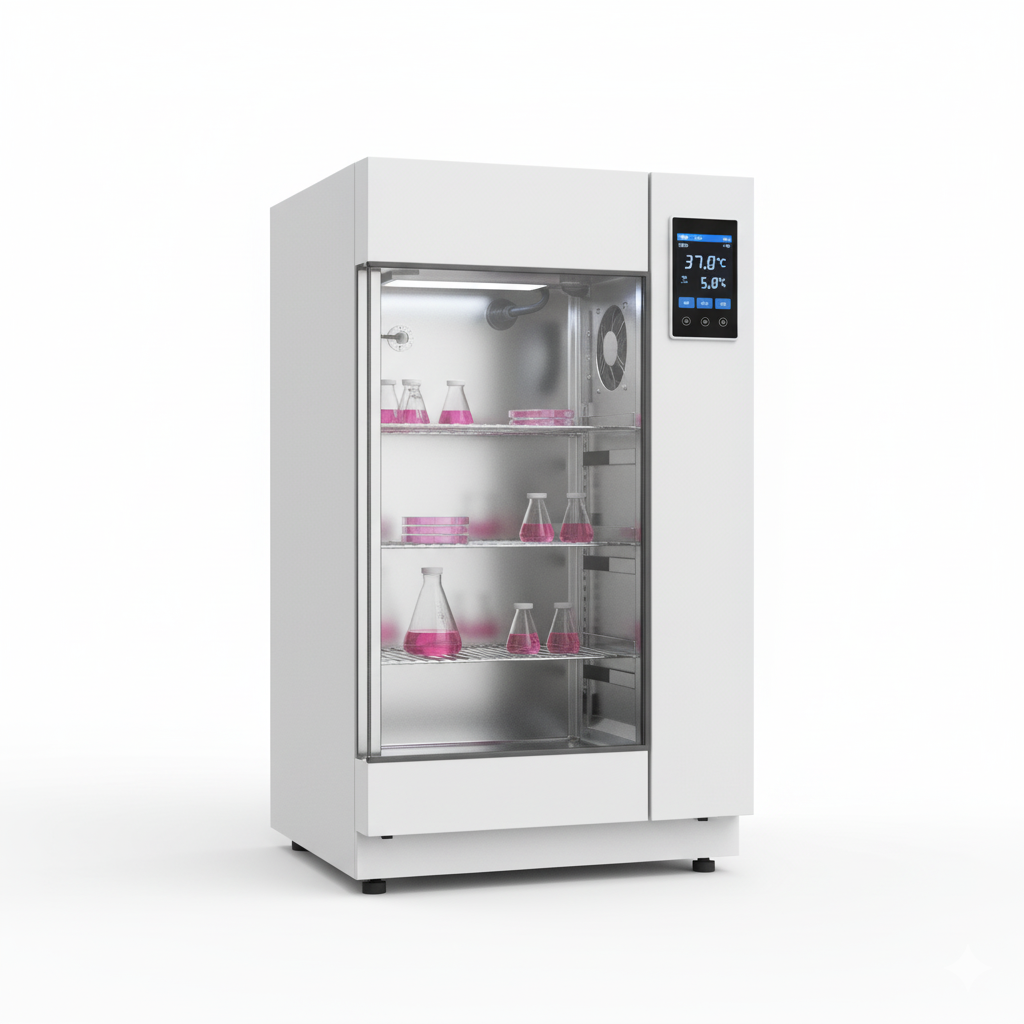
Based on the image and its visible display, this appears to be a CO2 incubator. The display shows a temperature of 37.0°C and a CO2 concentration of 5.0%, which are typical settings for cultivating mammalian cell cultures.
A CO2 incubator is a type of laboratory equipment that provides a controlled environment for the growth of cells, tissues, or microorganisms. It regulates temperature, humidity, and CO2 levels to mimic physiological conditions, such as those found in a healthy human body.
Key features and uses of a CO2 incubator include:
- Temperature Control: Most mammalian cells thrive at a core body temperature of 37°C. The incubator maintains this precise temperature to ensure cell viability and growth.
- CO2 Regulation: The 5.0% CO2 concentration works with the culture medium’s bicarbonate to create a stable pH environment (typically pH 7.2-7.4) that is essential for cell metabolism and health.
- Applications: CO2 incubators are crucial for a variety of research and medical fields, including:
- Cell biology research for maintaining cell lines.
- IVF laboratories for culturing and maintaining embryos.
- Tissue engineering and regenerative medicine.
- Drug development and testing.
- Microbiology research for bacterial and fungal cultures.
- Contamination Control: Many modern incubators are made with materials like stainless steel or copper and may include features such as UV lamps or HEPA filters to prevent contamination from microorganisms and airborne particles.
The equipment in the image appears to be a model from the brand Biobase. Several Biobase CO2 incubators, such as the BJPX-C50, have similar features, including a large touch screen display for monitoring and controlling parameters.
Category Uncategorized
Description
Based on the image and its visible display, this appears to be a CO2 incubator. The display shows a temperature of 37.0°C and a CO2 concentration of 5.0%, which are typical settings for cultivating mammalian cell cultures.
A CO2 incubator is a type of laboratory equipment that provides a controlled environment for the growth of cells, tissues, or microorganisms. It regulates temperature, humidity, and CO2 levels to mimic physiological conditions, such as those found in a healthy human body.
Key features and uses of a CO2 incubator include:
- Temperature Control: Most mammalian cells thrive at a core body temperature of 37°C. The incubator maintains this precise temperature to ensure cell viability and growth.
- CO2 Regulation: The 5.0% CO2 concentration works with the culture medium’s bicarbonate to create a stable pH environment (typically pH 7.2-7.4) that is essential for cell metabolism and health.
- Applications: CO2 incubators are crucial for a variety of research and medical fields, including:
- Cell biology research for maintaining cell lines.
- IVF laboratories for culturing and maintaining embryos.
- Tissue engineering and regenerative medicine.
- Drug development and testing.
- Microbiology research for bacterial and fungal cultures.
- Contamination Control: Many modern incubators are made with materials like stainless steel or copper and may include features such as UV lamps or HEPA filters to prevent contamination from microorganisms and airborne particles.
The equipment in the image appears to be a model from the brand Biobase. Several Biobase CO2 incubators, such as the BJPX-C50, have similar features, including a large touch screen display for monitoring and controlling parameters.